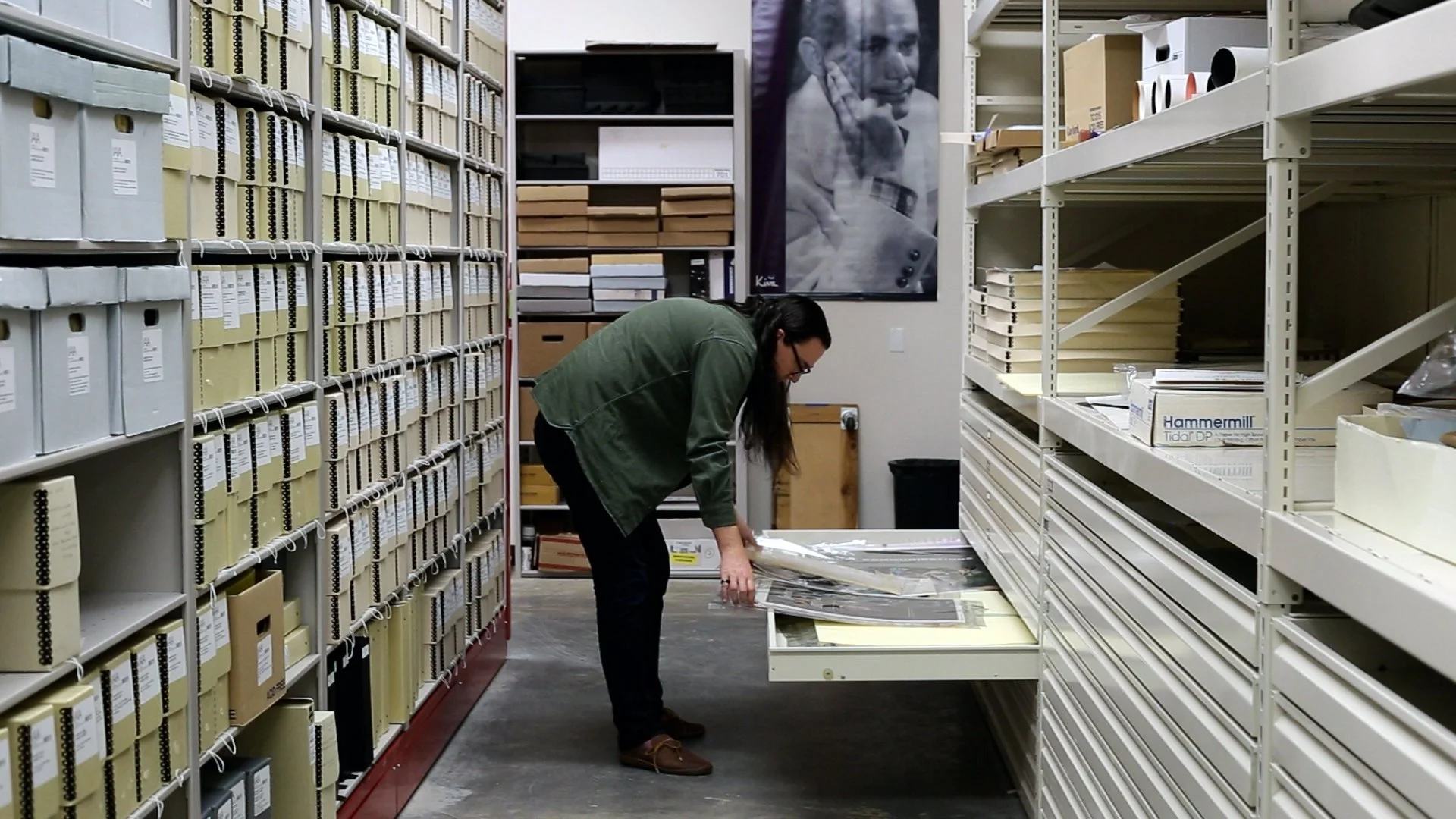
Looking through the RCCNA flatfiles. Photo by Maz Flores Reyes.
In the last newsletter, I left you with a provocation. I said that on an archive or museum label “Maker Once Known” wasn’t a resignation but an invitation—that erasure isn't absence, that the names weren’t gone; every anonymous label had the possibility of a Maker, it was just waiting for the right person to recover it. Reality is, sometimes, it’s just not possible to know the Maker. Hundreds of years in the past, no written documentation, no stories to follow, no lineages to resound with. But (yes, and?) we can at least start and try with what we have. And that’s what I’ve been trying to do over the past few years. So how do you (we) actually discover or recover a Maker?
Start from online databases—be an internet art history sleuth—that’s what I did. I am a child of the Carmen Sandiego generation, after all. Look for all that you can online, then move into local libraries, etc… Eventually, though, it might require adventuring; the need to find, go to, and dig through actual files and archives. You have to plan, consider questions, possibilities, be nimble, look, listen, and learn. Connect the dots meets Where’s Waldo. You do it in boxes. You lift them out of flat files. You read folder upon folder of documents, correspondence, meeting notes, invoices, anything that can give you a hint or a pathway. I did it by flying and then driving into the high desert and asking to see the things someone had thought to save and hold.
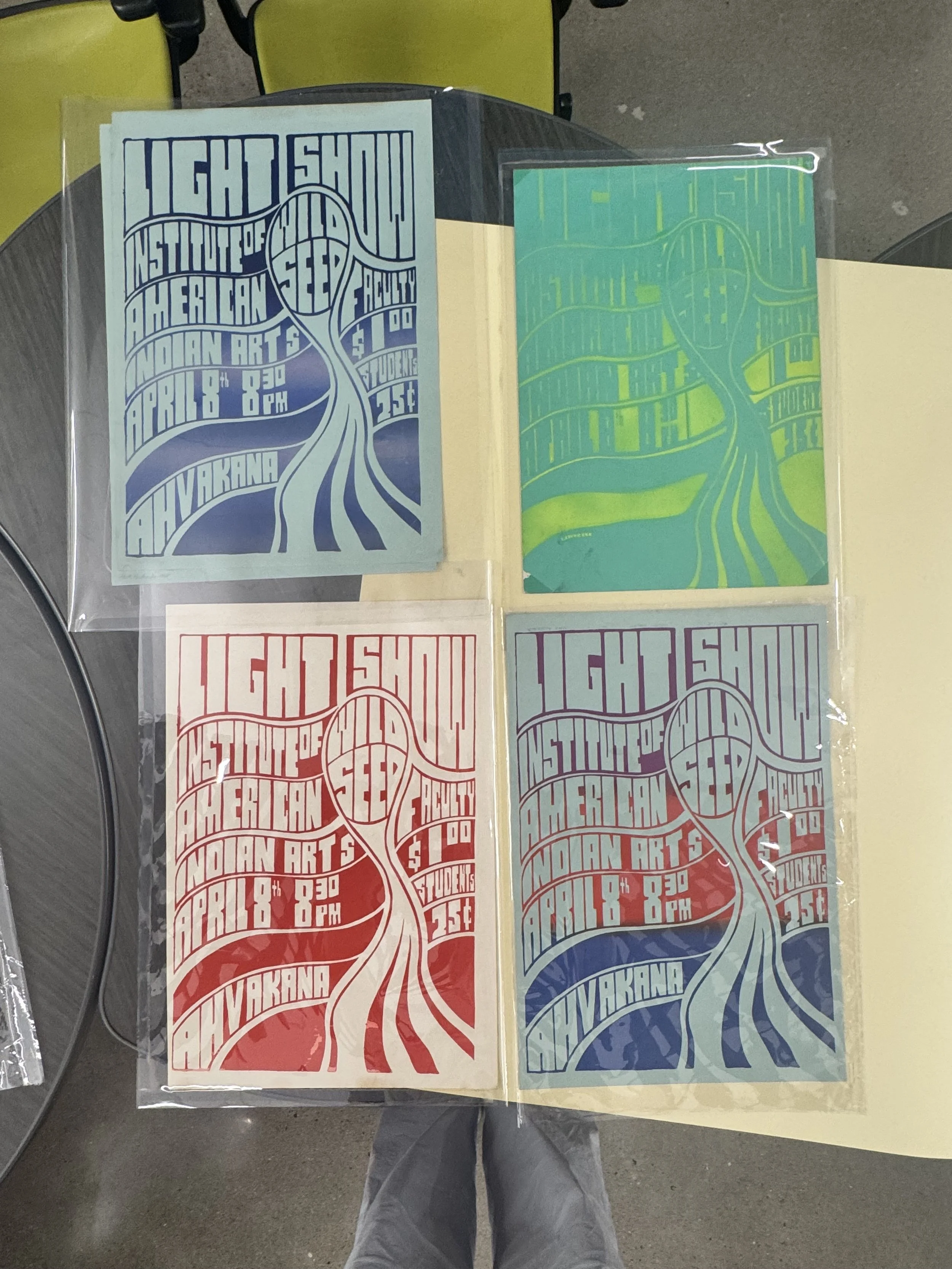
Lawrence “Ulaaq” Ahvakana (b. 1946, Iñupiaq) initial drawing (upper right) and three different silk screen prints of Light Show (1968) involving split fountain color and paper variations. IAIA research, 2025.
American Indians
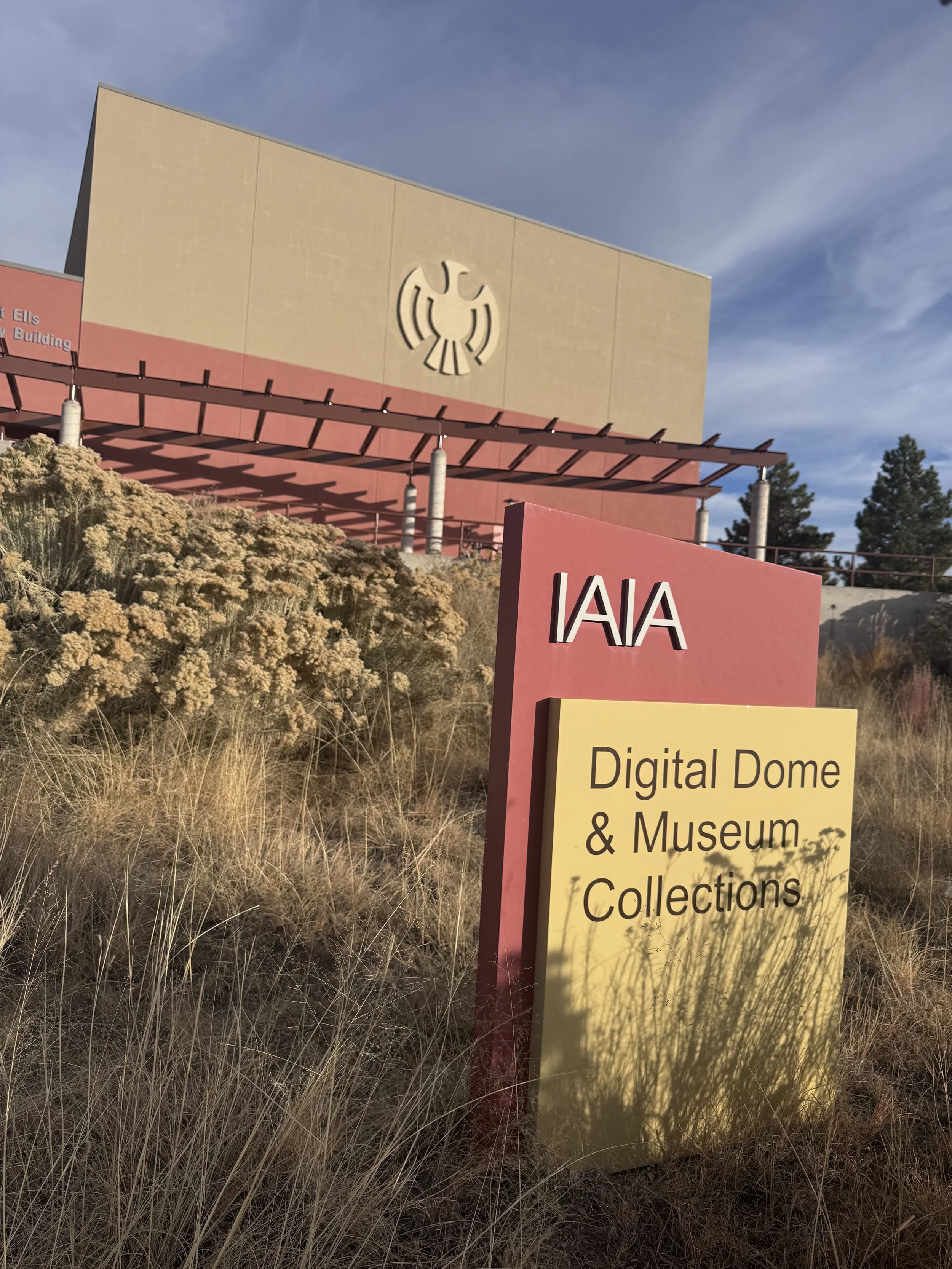
For those who don't know it: the Institute for American Indian Arts (IAIA) is one of the few places on Turtle Island (what is now called North America) built by and for Native artists—a college, an archive, a museum, a living argument that our work is design and always was.
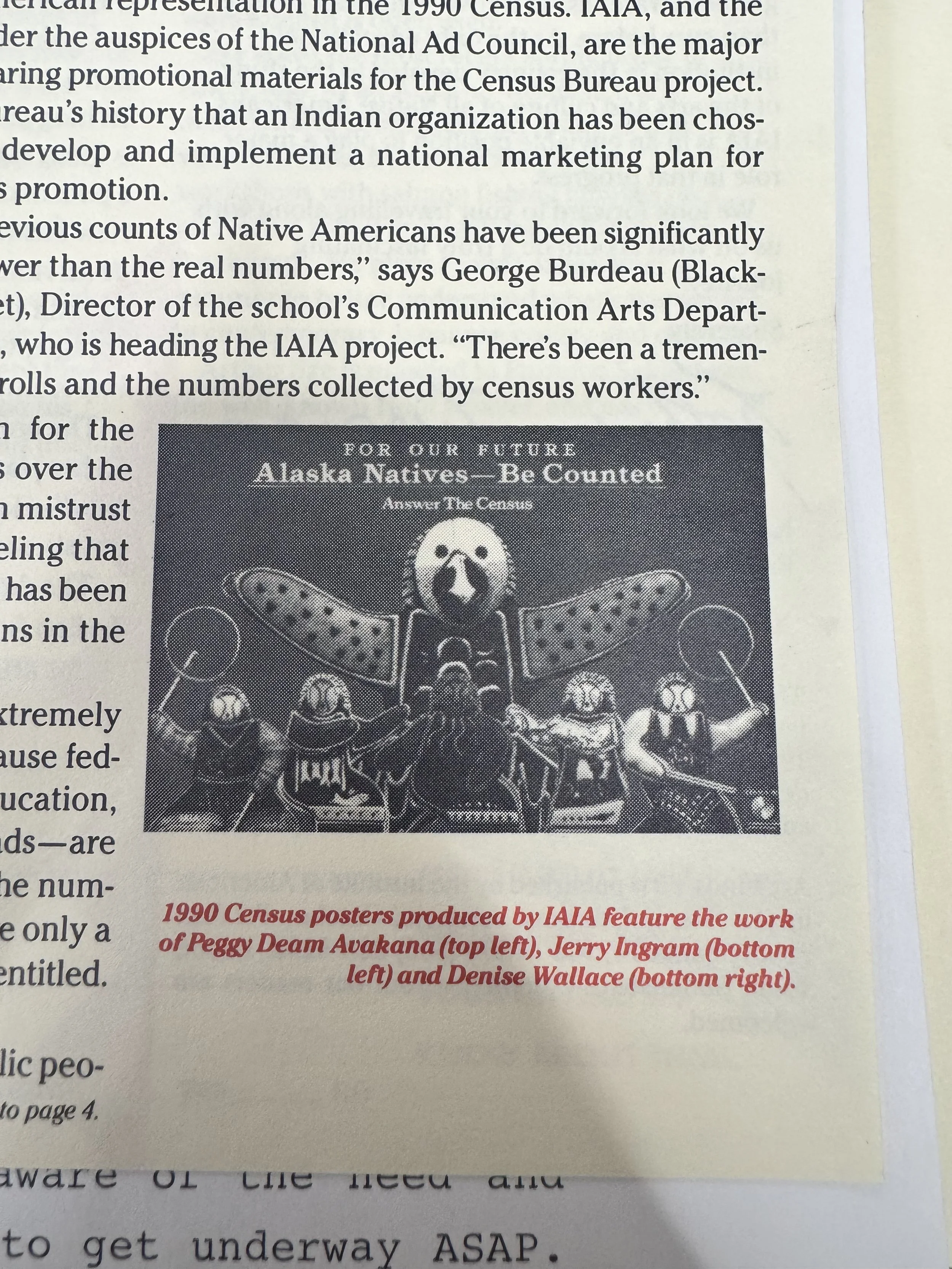
Last Spring, I emailed the Research Center for Contemporary Native Arts at IAIA. I reserved access and time to look through the archives, bought a plane ticket to New Mexico, booked a hotel room, rented a car, and just jumped right into the research. I planned to see what was available, but I was also specifically looking for details about the 1990s Census Bureau poster campaign. I knew there were 4 to 5 different posters made specifically for the Native gaze, but there weren’t really any details about who designed them. Was the artist on the poster the actual designer? Who picked the artist? Who was the designer who chose the typeface, size, etc…? So many questions. And there were no direct answers.
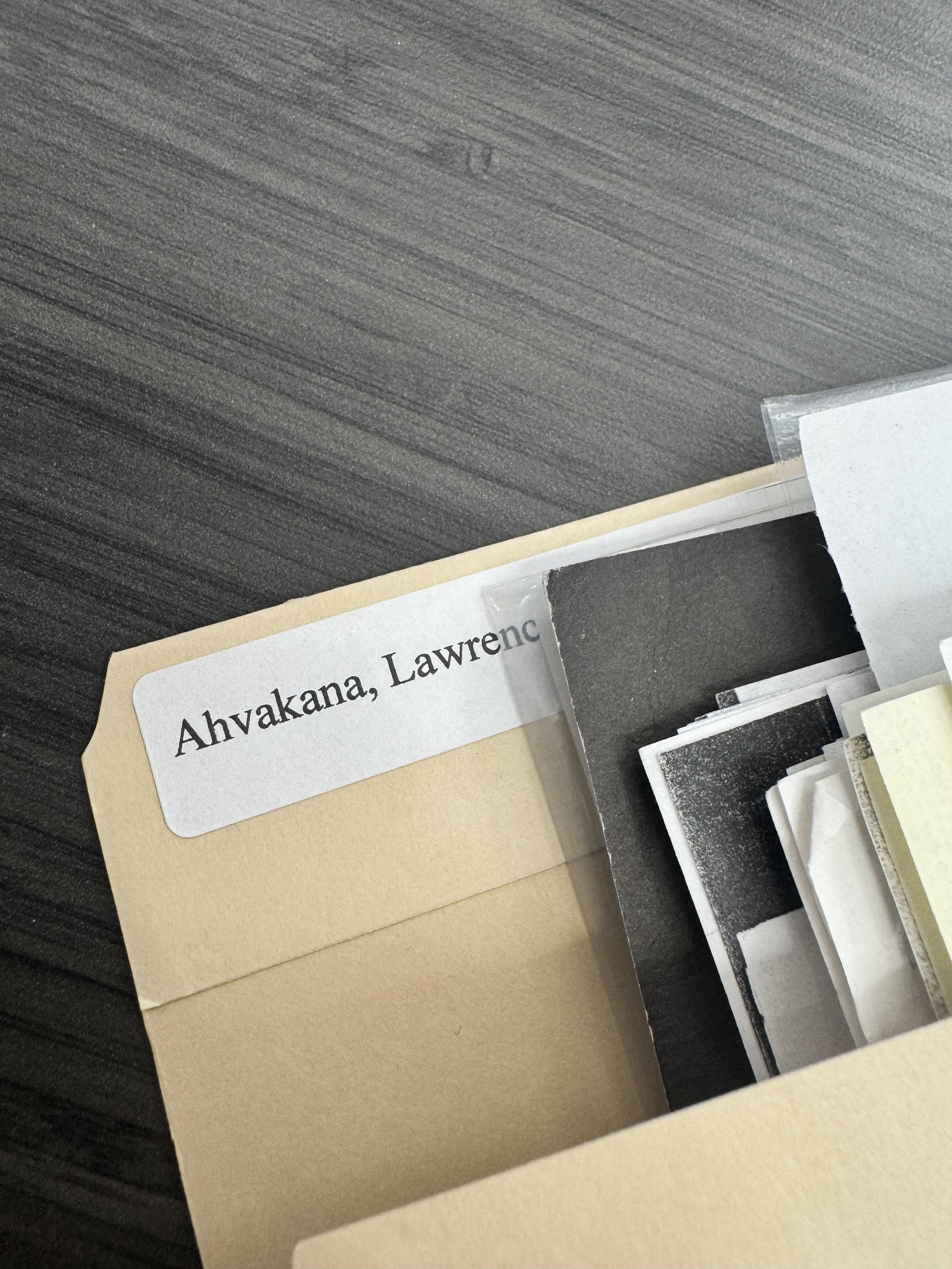
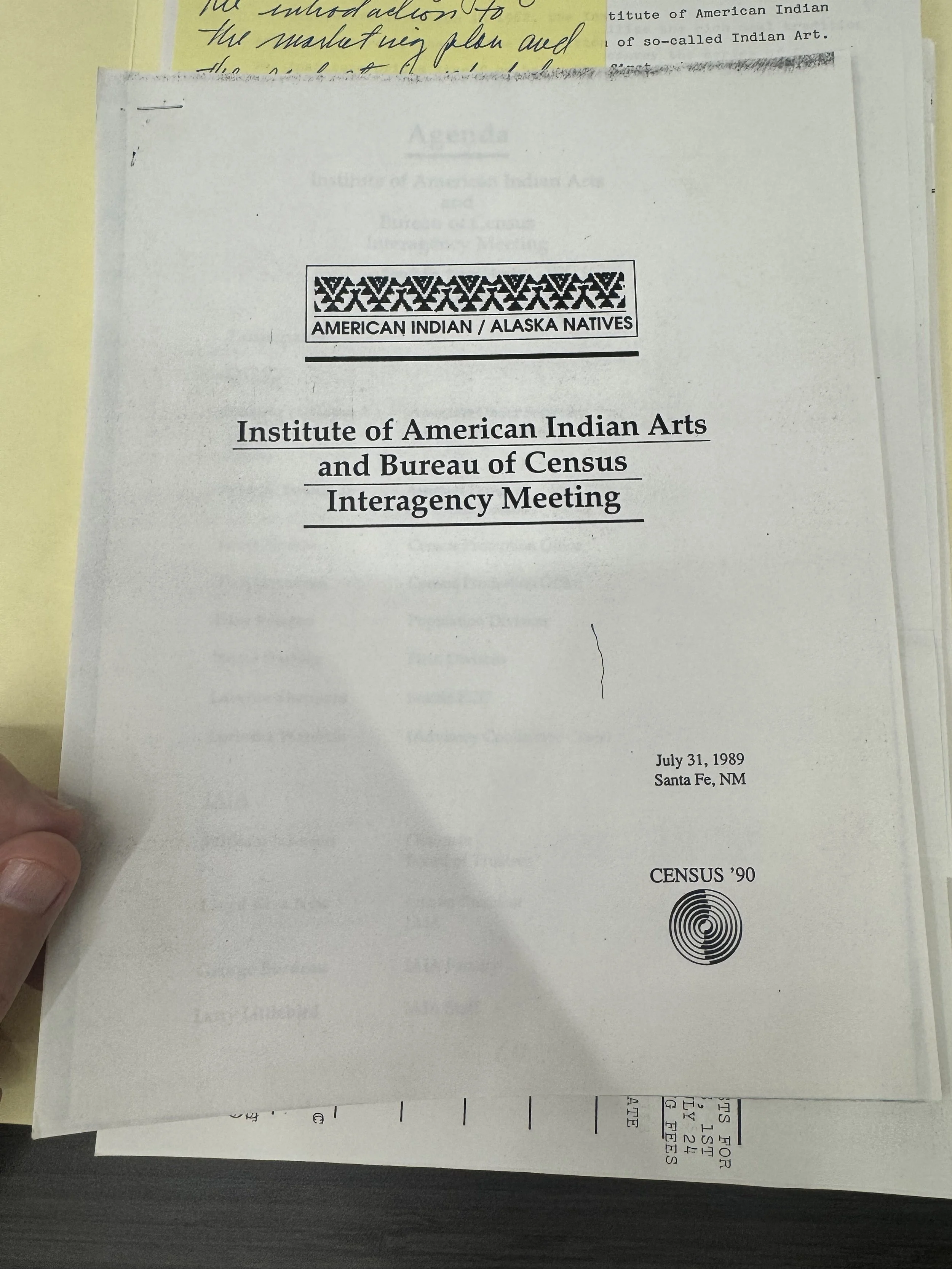
Process photos of my research at RCCNA. Santa Fe, NM, 2025.
But within that space, both concrete and liminal, I was able to find objects I hadn’t thought about, and more importantly, meet people and community that also valued preservation. The dots did connect sometimes. Sometimes they just remained open, ghosts of what I wanted to fill the truth. And most of the time, I was given other great works to consider, talk to, be with—that was key—being with objects that needed someone to recognize them, let them speak their message to a present eye. It's then I could consider showing them, activating their original purpose: posters that sing their message, on repeat.
Activation
So you find the Maker (sometimes…let's be honest). Then what? Here's the thing nobody tells you about archives: they're dead until someone uses them (we can talk about Power another day…). A name on a label is still a name in a box, and I didn't fly to the desert to re-file people more politely. The point is to switch the lights on—to elevate what was sitting in a folder marked “unknown” and put it in conversation—make it present tense. That's the whole foundation of Designed to Be Red: what if the designer was Native? Not a craftsperson, not an anonymous “artisan,” not a cultural adjective, period, or region—a designer, with intention, training (or not), talent, a point of view, an audience to please or provoke. Grant that one thing and the entire shelf reorganizes itself: craft becomes authorship, artifact becomes design, “the past” becomes a lineage that never actually stopped—it runs straight through IAIA and out the door into studios where people are still making right now. Some folks call that preservation. I think it's closer to activation. (And if the institutions that stamped “Maker Unknown” in the first place want to feel that as something more like anarchy—well...hooray for you.)
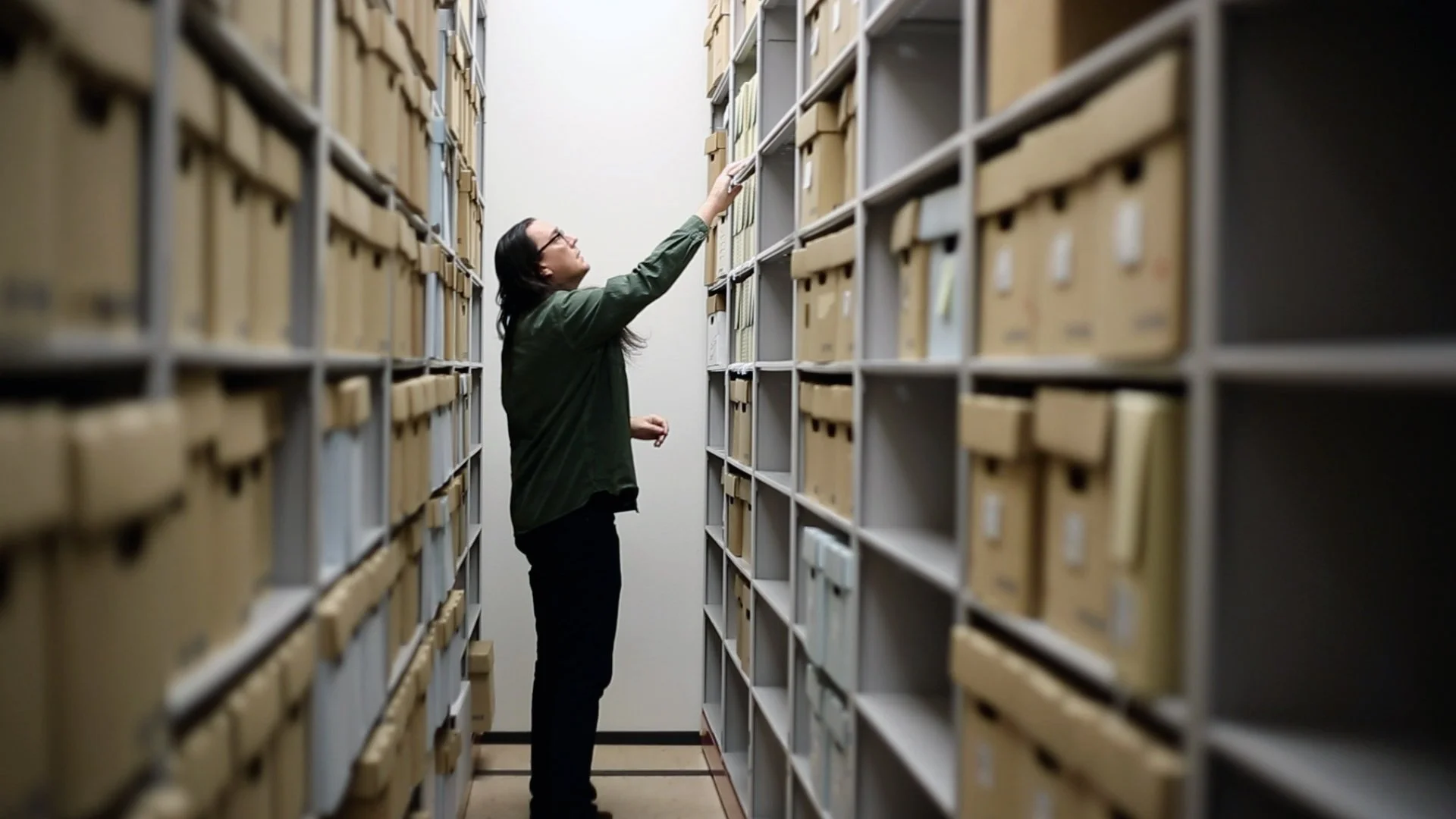
In the IAIA archives. Photo by Maz Flores Reyes.
Archives in Action
So much of my research, and then some, was supported by the staff and team at the RCCNA, and the Library (of course, nerds!). If any of this is useful to something you're chasing down, or you just want to poke around and get lost for a while, give it a gander. Research Center Website
The truth is, an archive isn't only boxes in the desert. It’s the recipe nobody wrote down, the story your auntie tells the same way every time (for the hundredth time…), the name someone will one day be glad you kept. So this week, go be somebody's record—call the person who taught you something and tell them you remember.
More soon,
—Brian