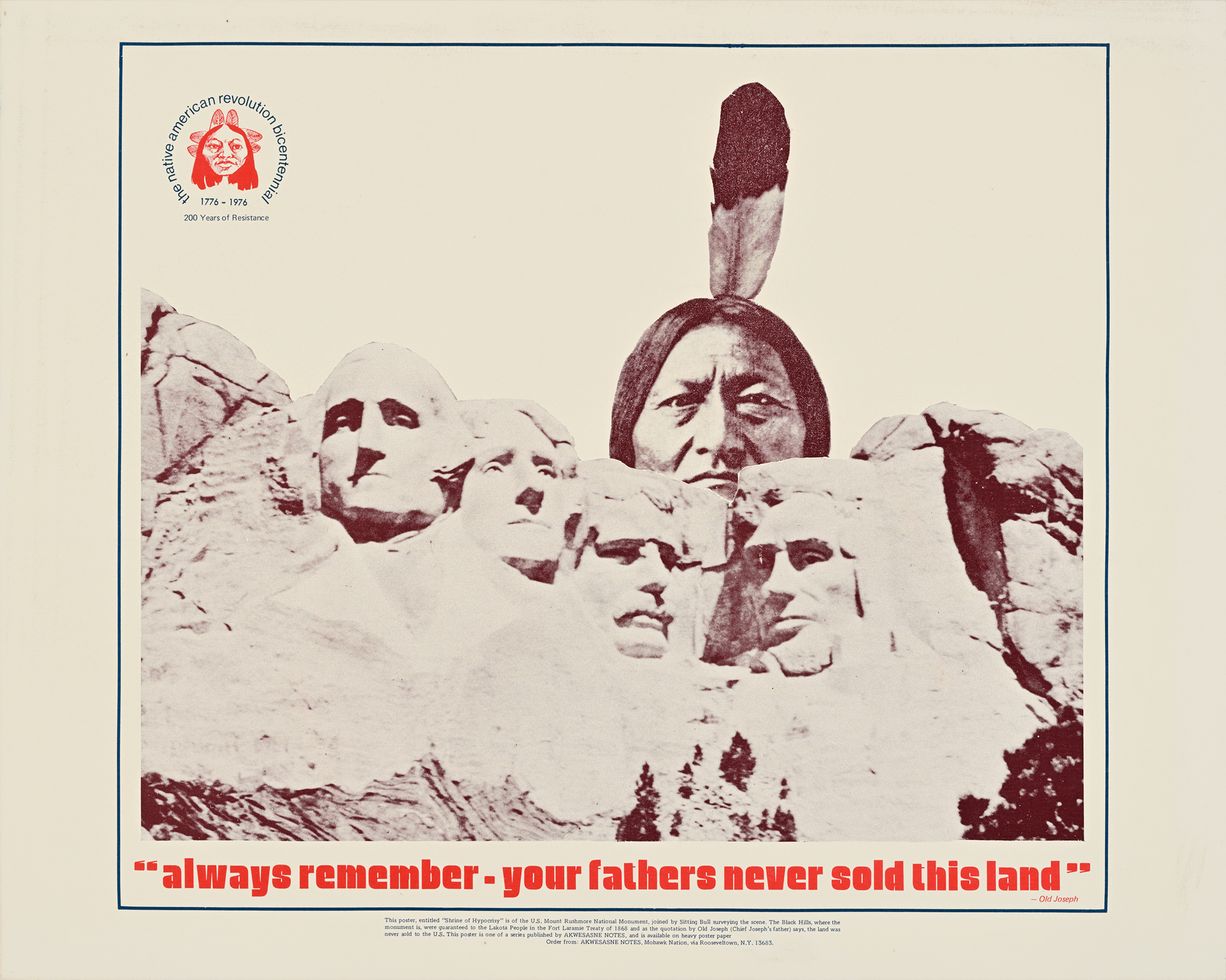
Shrine of Hypocrisy, 1976
Akwesasne Notes (Mohawk Nation), poster, 22.5 x 17.5 inches.
(Created for the U.S. Bicentennial in 1976.)
Long before the “Founding Fathers” decided to dominate, decimate, and reshape Turtle Island, thousands of creative Natives were making, designing, and enriching our lives with artistic complexity.
They understood the land, the seasons, the shifts in migratory patterns. They had families, clans, tribes. They told dad jokes, they squabbled, they celebrated.
The American experiment turns two hundred and fifty this week; the whole country's rolling out the bunting, the fireworks, the commemorative flatware—as if a quarter-millennium is a long time to have been somewhere.
Adorable.
For scale: the works in Designed to Be Red span nearly eleven centuries. So the big red-white-and-blue milestone everyone's grilling hot dogs over? Roughly the last stretch of a visual lineage that was already ancient when the founders were arguing over the calligrapher for the Declaration. Petroglyphs, wampum, pottery, parfleche—design was happening on this land for a very, very long time before there was a 4th of July to have opinions about. Not to mention democracies that already existed on this continent. Turtle Island doesn't need a candle on the cake. It's not the anniversary of the country I'm thinking about this week. It's a museum label.
“Maker Unknown.”
Walk into almost any museum holding Native material, and you'll meet that phrase over and over. Maker unknown. Artist unattributed. Culture, unspecified. It reads like a shrug, pardon, we just don’t.
Throughout Designed to Be Red, wherever a name hasn't yet been recovered, the caption says something different: Maker Once Known. Because that's the truth of it. Someone knew whose hands beaded that pennant, wove that belt, cut that block, pulled that print—their name, their Nation, their teacher, the person they made it for: they were known. They were loved. As I write in the book: “Anonymity was not the maker's condition—it was imposed.” The names weren't lost through carelessness. They were erased through policy—trading posts that didn't record them, museums that didn't ask, a design canon that never looked. “Maker Once Known” is not the same as “Unknown.” The first is a research project. The second is an alibi.
And here's the part I need you to sit with: the phrase is not a resignation. It is an invitation. Erasure is not the same as absence. The knowledge persists in communities. The lineages continue in families. Every anonymous label is a name waiting for the right person to recover it.
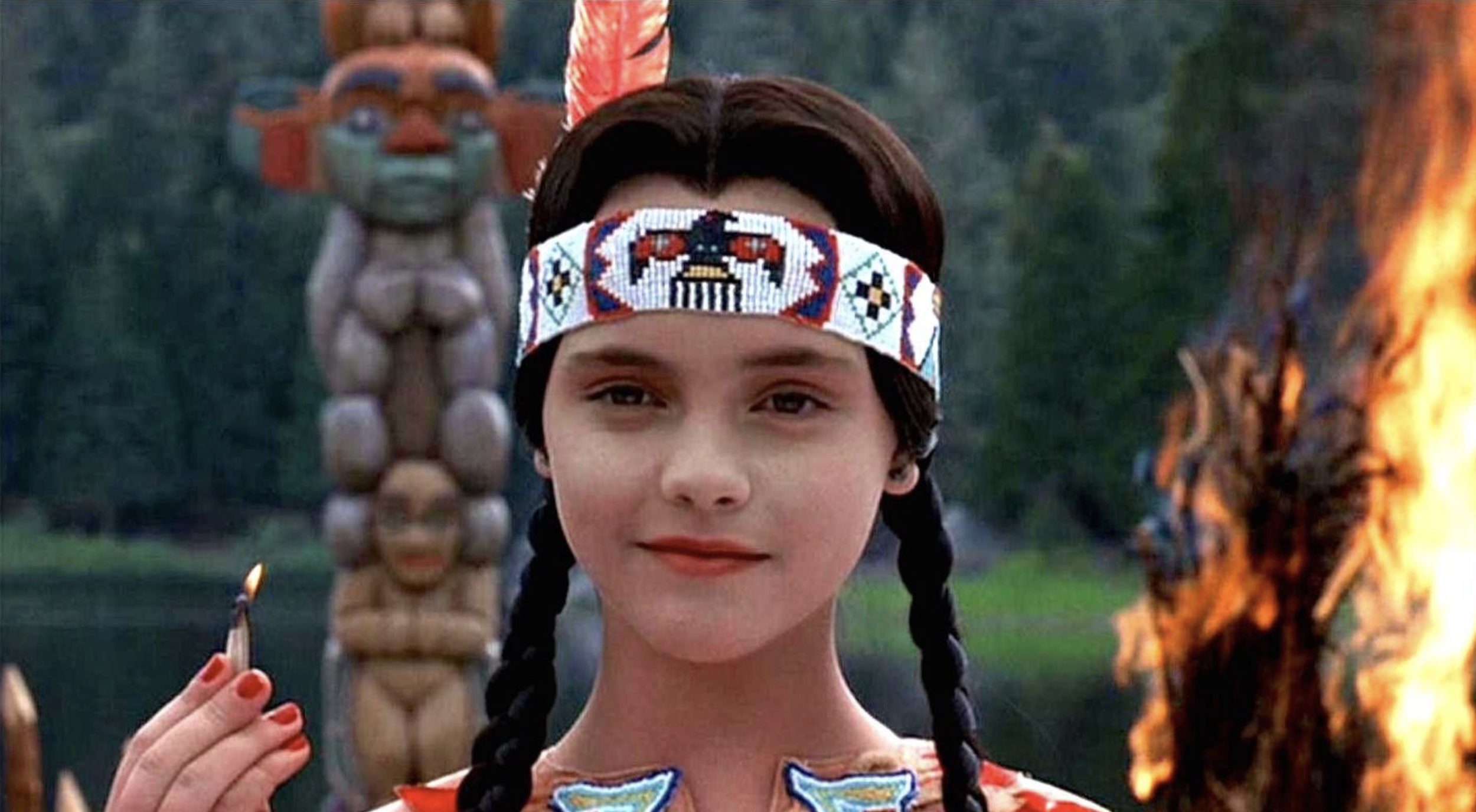
Wednesday Addams in the "Thanksgiving Play", from the 1993 film Addams Family Values. Forced by camp counselors to play Pocahontas in a sanitized Thanksgiving play, Wednesday (played by Christina Ricci) rebels, gives a fiery speech about the historical mistreatment of Indigenous peoples, and holds up a match to burn down the pilgrim village.
So Who Gets to Be “Known”?
That's a question about power—specifically, who's been holding the pen, the press, and the purse. For a long time, the people running publishing and the canon decided that Native work was craft, not design. Artifacts, lost in the past, and not actual authorship. Less than. Anonymous. The monolith did its job: one flattened story, told about us rather than by us, with the names filed off to make it fit. A thing of the past.
Which is exactly why a book (and [re]discovery process) like this has to name names, loudly, on every page it can. Designed to Be Red puts the makers back in the room—named, credited, in dialogue, present tense. (When we can find them, and we know it needs to be a living document too…) So when someone asks why publish this now—of all the years, why the one with the fireworks—that's the answer. The country's busy celebrating 250. I'd rather spend the week making sure the people who've been designing here for eleven centuries (and millennia before that) stop getting filed as “unknown.”
Wrap up: ArtViews Photos
Thanks to everyone who came to AFA’s ArtViews. The panels, conversations, and just time for fellowship were really heartwarming. The speakers discussed and shared a broad range of contemporary challenges and complexities in our Native art and design worlds. And it sure showed. Both rooms were packed—the dialogue and feedback were really stellar. Here are just a few snapshots taken by Marc Tousignant.
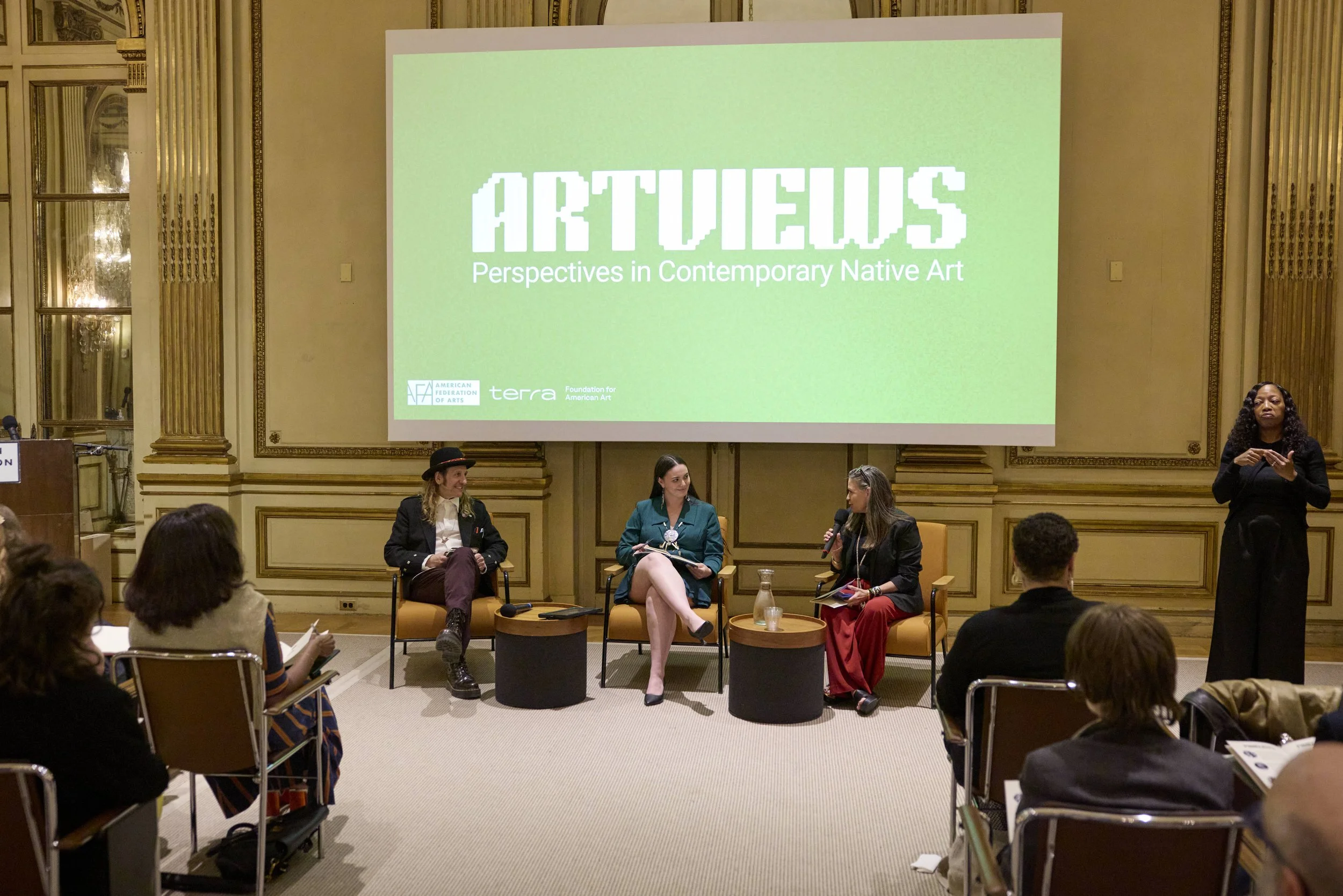
Neal Ambrose-Smith, Sage Innerarity, and Danyelle Means discussing education and mentorship.
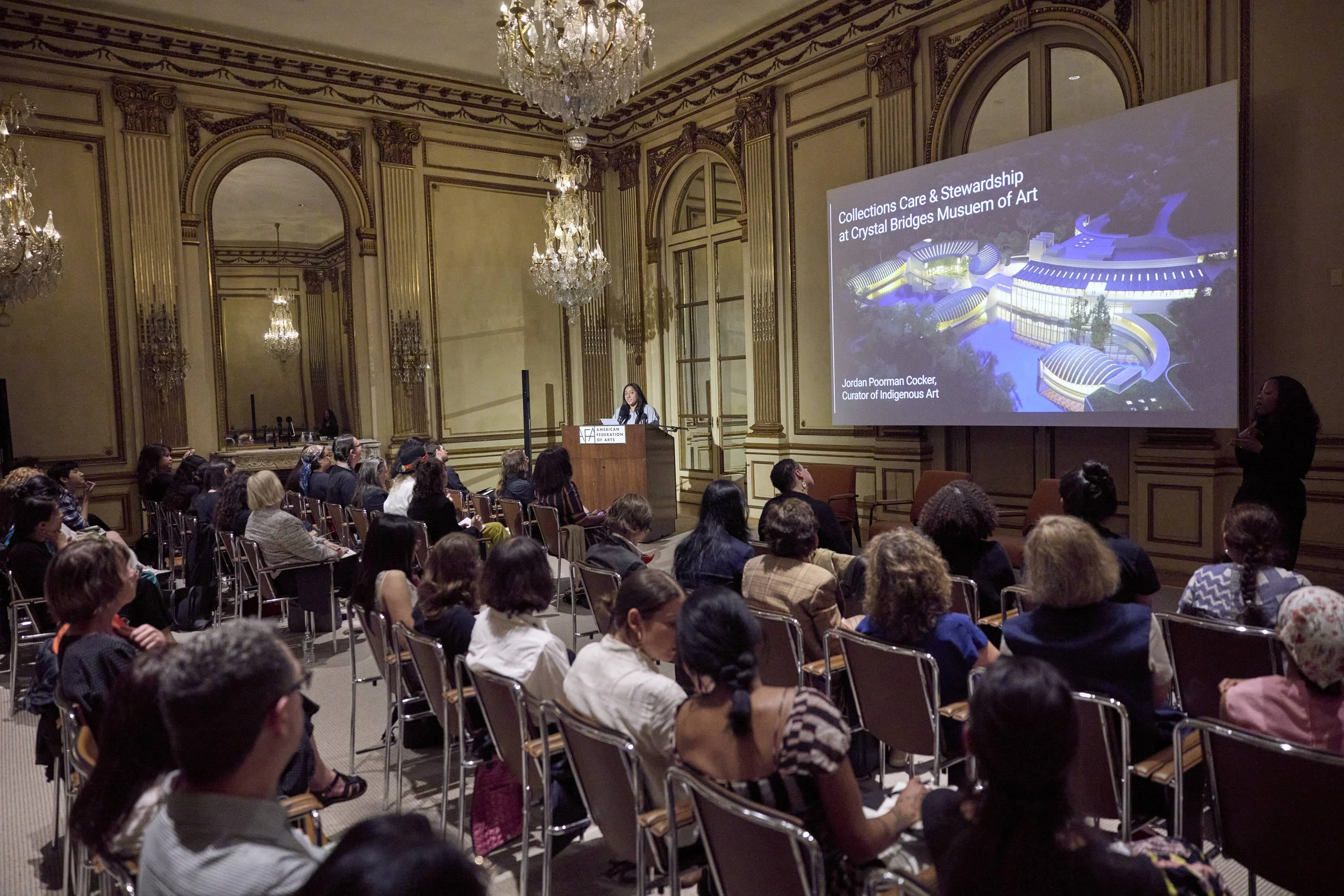
Jordan Poorman Cocker talking about their work, curation, and the expansion at Crystal Bridges.
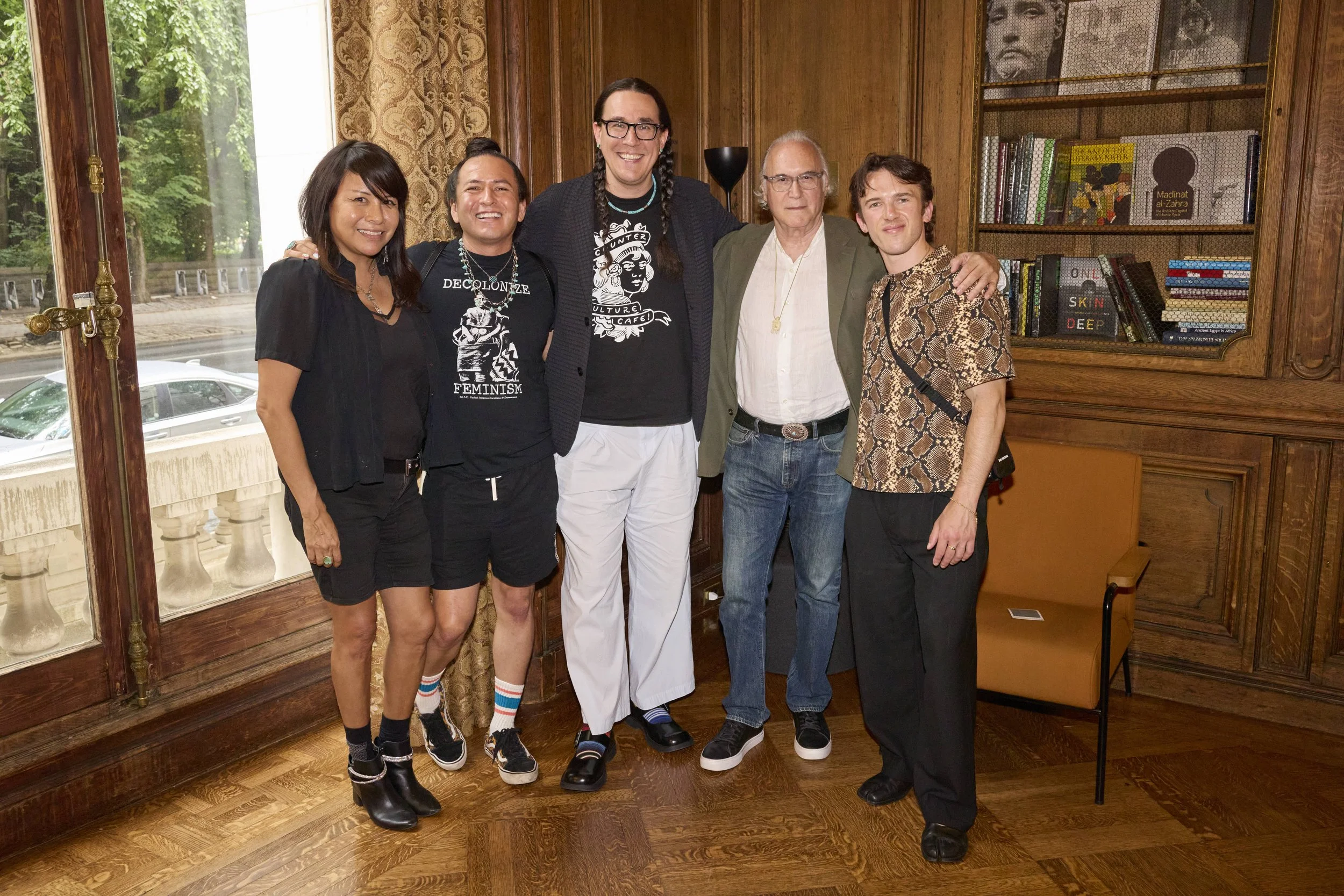
Laura Ortman, Demian DinéYazhi’, myself, Alan Michelson, and Petala Ironcloud together at the reception afterward.
As the Summer heat descends upon us, stay cool, stay hydrated, and stay safe. Tell your family and friends you love them, hang out together, and be present. Of all the things I’m learning—the busier I am—being in, and with, community, those moments are really sacred and vital. So love on those people and share whatever you can.
More soon,
—Brian