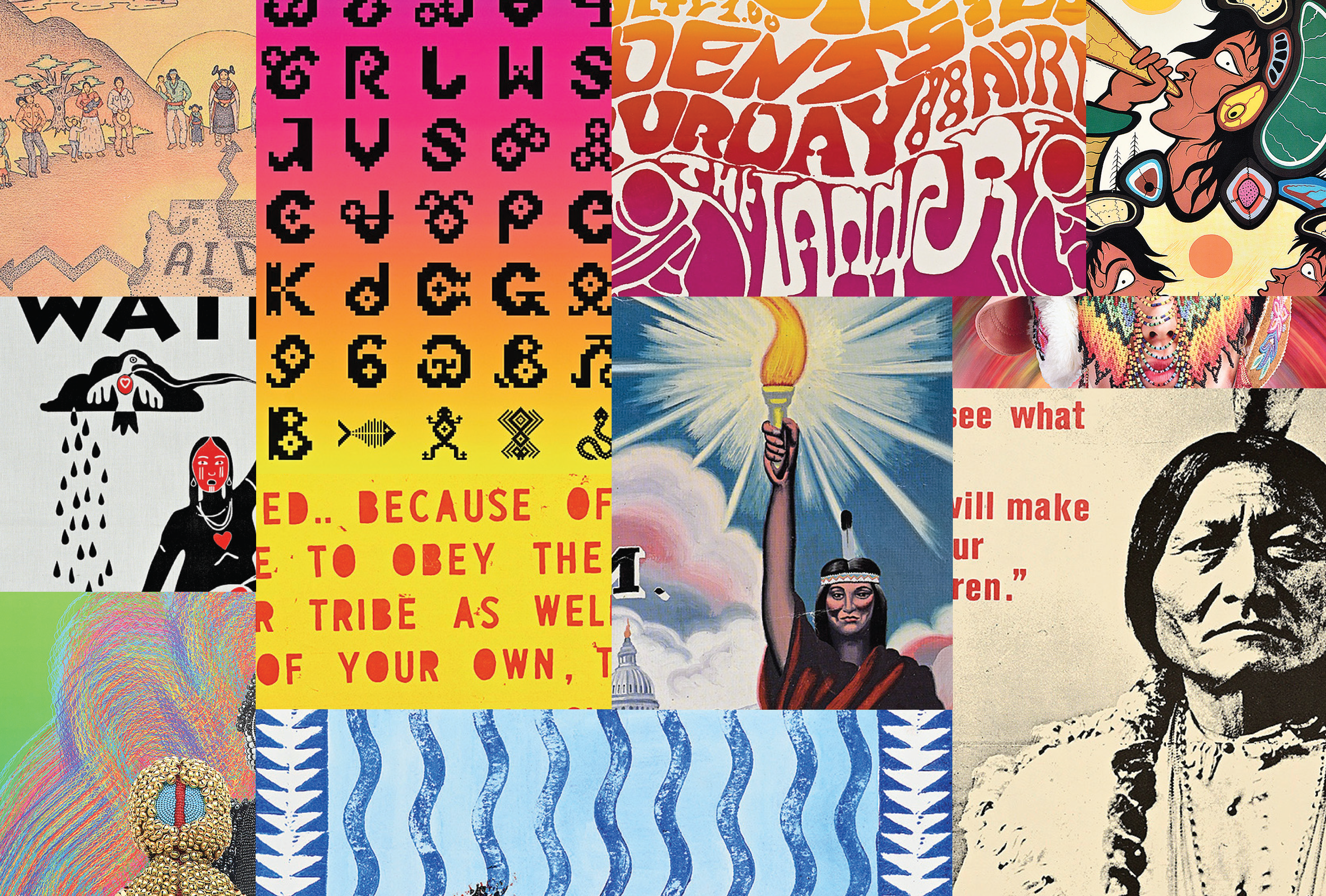
For the uninitiated: this is Designed to Be Red
Here it is. Something a little different and new for me—a newsletter mixing together design, art, books, history, IBPOC (Indigenous, Black, and People of Color), along with sass and fascinations. This audience is a mix of collaborators, contemporaries, designers, art people, nosey nancys, and friends—so as a refresher: hello, I'm Brian Johnson. I grew up in central Virginia, and I'm a member of the Monacan Indian Nation. I'm a partner at Polymode, primarily a graphic designer and book nerd, and I co-founded an online school called BIPOC Design History. Some of you may know that for the past three+ years, I've been deep in research and projects around Native American design history.
To jump forward: I have submitted Designed to Be Red to the printer. (Much excite!) My exhibition opens in September. Somewhere between the manuscript and the opening, I decided to write to you—directly, the way I've been meaning to all along. If you're new here: welcome. If you've been following the work for a while, thank you for staying with it.
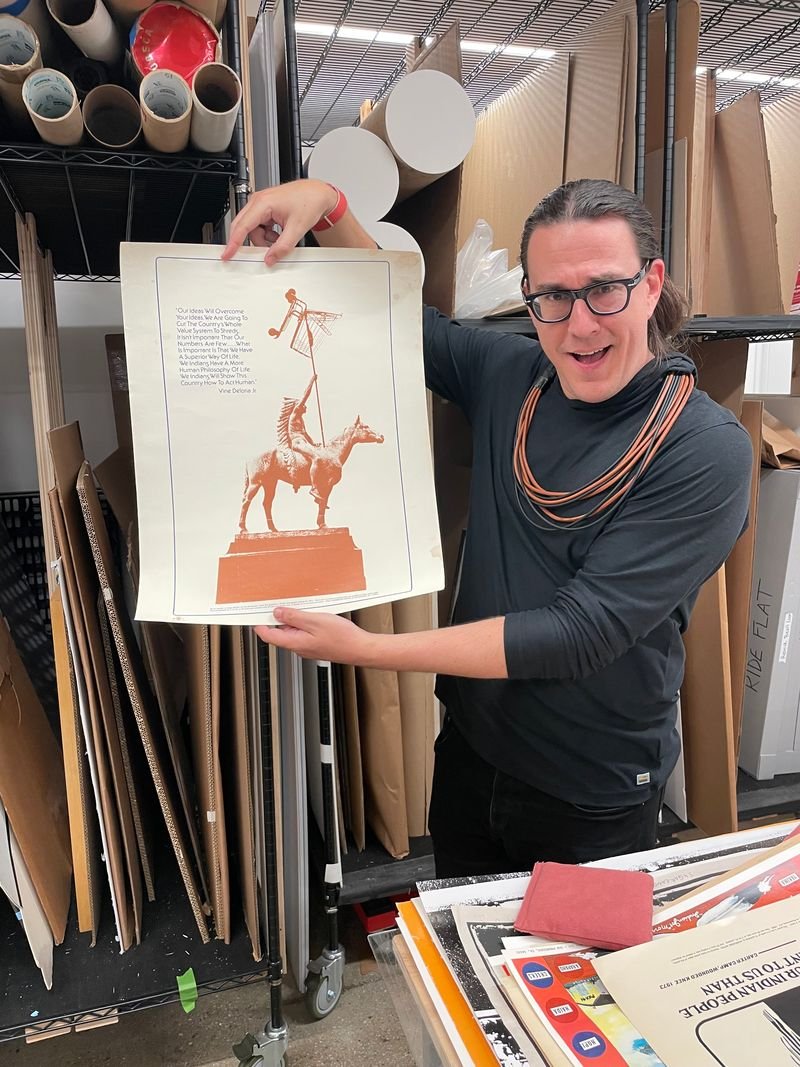
Looking through my research at Poster House in 2024. I am holding Our Ideas Will Overcome Your Ideas, c. 1980. Akwesasne Notes (Mohawk Nation at Akwesasne)
So what is Designed to Be Red?* It’s a book, an exhibition, and the first publication to document Native American and Indigenous graphic design as a foundational practice, not a footnote. Three years in the making, I have been tracing design lineages across Turtle Island that colonial histories tried to erase: from the sovereign visual systems of wampum, pottery, and parfleche to contemporary works of resistance and joy.
The book, published by DelMonico Books, edited by Heidi Brandow (Diné/Kānaka Maoli), with developmental and copy editing by Neebinnaukzhik Southall (Chippewas of Rama First Nation), spans over 100 works, more than 80 Tribes and Nations, and nearly eleven centuries—from petroglyphs and wampum belts to contemporary typography and protest design. It also includes a community conversation with six Indigenous designers, teachers, and scholars on what Native design means, where it comes from, and where it's going. Much of the research was deepened during my time as a 2025 Mellon Research Fellow at the IAIA Research Center for Contemporary Native Arts in Santa Fe.
The exhibition at Poster House zooms in on one piece of that story: Native American and Indigenous poster works, featuring 103 works representing the past one hundred years. It opens September 25th and then tours nationally with the support of the American Federation of Arts.
*For the deeply interested, the title responds to and expands on Vine Deloria Jr.'s God Is Red (1973). It remains a foundational text in Indigenous studies, arguing for the primacy of place, land, and communal relationship over the linear, individualistic frameworks of Western thought. It had a profound impact on my own design thinking and spiritual life. Designed to Be Red extends this lineage into the visual realm, where Native American & Indigenous designers assert their own histories, aesthetics, and ways of seeing against the flattening forces of extractive design culture.
All this being said, I hope to keep sharing my findings, research, joys, and updates through these types of newsletters. If there are collaborations we could explore together, I'd love to hear from you.
Have a great week, and hopefully see you at an event soon!
—Brian